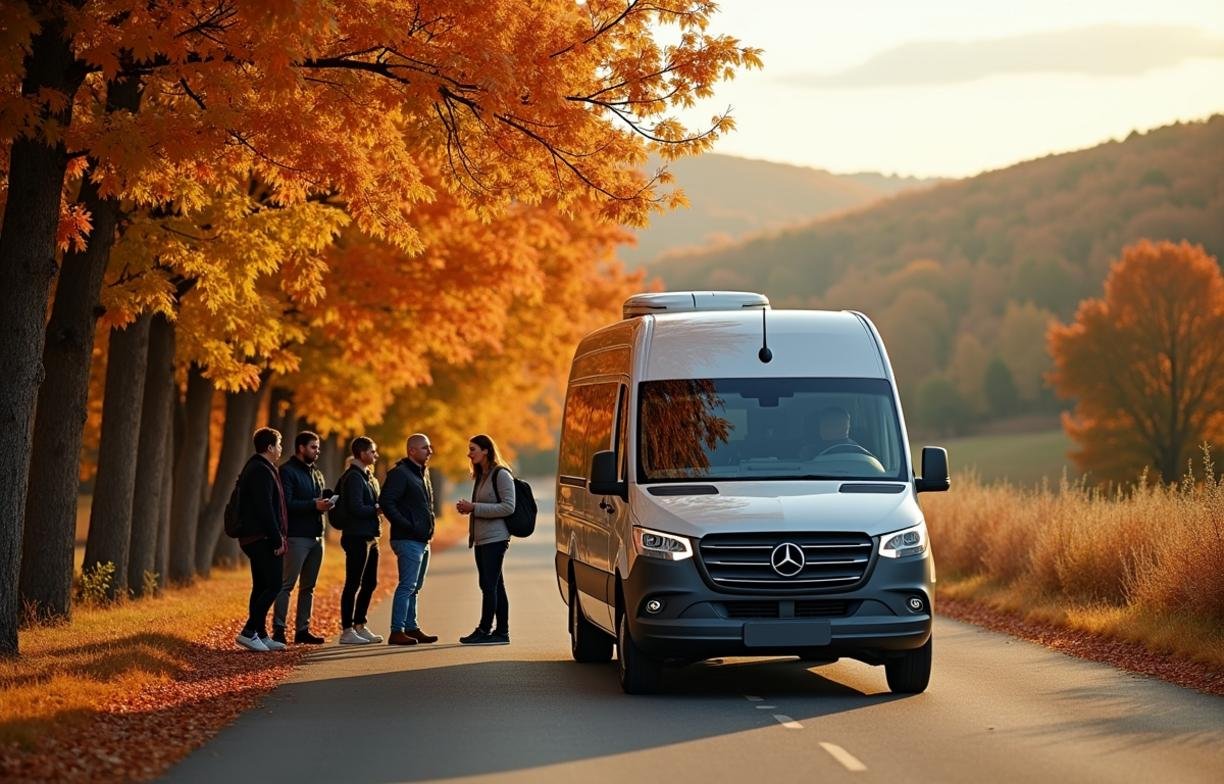
Fall foliage group travel is most successful when planning the route, timing, and passenger flow carefully. Private drivers make that easier because your group can follow color reports, stop at overlooks without parking battles, and keep one schedule instead of coordinating multiple cars.
Peak color is a moving target. Elevation, latitude, rainfall, drought stress, and cold nights all shift the timing. For groups, the advantage is not just comfort. It is control over where the day goes when one valley is past peak and another ridge is just turning.
Why private drivers change the fall foliage itinerary
A private driver gives your group a flexible transportation base while everyone watches the same scenery. That matters on fall routes where the best stops are often 8 to 20 miles apart, with limited shoulder parking and short daylight windows.
The U.S. Forest Service explains that the brightest reds and purples develop when sunny days are followed by cool nights above freezing. Early hard freezes can dull color quickly. That means a route planned six months ahead may need adjustment during the final 72 hours.
For groups, private transportation also reduces dwell-time waste. If 14 people arrive in four cars, each stop includes separate parking, walking, texting, and regrouping. A single vehicle can unload once, hold gear, and move when the group is ready.
Driver familiarity matters in foliage regions. In New England, Blue Ridge Parkway towns, the Catskills, and the Upper Midwest, scenic roads often include steep grades, pullouts, narrow village streets, and sudden congestion near trailheads. A professional driver can monitor shoulder access, turnaround space, and posted vehicle restrictions while the group focuses on the views.
Best timing for color, crowds, and daylight
Fall color generally moves from north to south and from higher elevation to lower elevation. In the Northeast, northern Maine and Vermont high country often peak from late September into early October. Southern New England and the Hudson Valley often peak from mid to late October.
In the Southern Appalachians, the National Park Service notes that Great Smoky Mountains color usually begins at high elevations in early October and reaches lower elevations from mid-October into early November. That elevation spread is useful for groups because a driver can reposition the itinerary by 2,000 to 3,000 feet in elevation if one area is ahead of schedule.
Daylight is another constraint. Around mid-October, many foliage destinations have only about 11 hours of daylight, and usable scenic light is shorter in valleys. A 9:00 a.m. departure may miss misty overlooks, while a late lunch can push the best ridge drive into shadow.
Weekdays are materially easier. Many popular foliage routes experience their heaviest traffic on Saturdays between late morning and mid-afternoon, especially within 3 miles of trailheads, farm markets, and covered bridges. A private driver lets the group front-load major overlooks before lunch and move food stops later.
Choosing the right vehicle and driver setup
The vehicle should match the roads, the group’s mobility needs, and the amount of gear. Passenger count alone is not enough.
A 14-passenger van may work for one hotel pickup and a short scenic loop. A minibus is often better for groups bringing camera tripods, coolers, walkers, or multiple jackets per person. Full-size motorcoaches can be comfortable, but they are not allowed or practical on every foliage road.
Small groups and winding roads
For 6 to 12 travelers, a chauffeured van or executive sprinter can handle tighter roads better than a larger bus. This is helpful in areas with covered bridges, gravel pullouts, or historic villages with narrow lanes.
Ask whether luggage space is separate from seating. A group doing a day trip may need only one bag per couple. A multi-day route can overload a small vehicle quickly, especially when everyone packs rain shells, boots, and camera equipment.
Mid-size groups and comfort
For 13 to 28 travelers, a minibus usually gives the best balance. Many minibuses have high windows, step-free or low-step entry options, and enough aisle space for older travelers.
If your group includes seniors, ask about step height before booking. A typical bus step can be 10 to 14 inches, which becomes tiring after six scenic stops. Groups with limited mobility should request a vehicle with a wheelchair lift or confirm ADA-accessible equipment in writing.
Larger groups and restricted roads
For 30 or more travelers, route vetting becomes critical. Some scenic roads restrict large vehicles by length, weight, bridge clearance, or seasonal traffic management rules.
The Federal Motor Carrier Safety Administration requires interstate passenger carriers to meet federal operating authority and safety standards. For chartered group transportation, the carrier’s USDOT number and insurance status should be verified before the trip.
Which option fits your group?
Different foliage groups need different transportation plans. The right choice depends on passenger count, walking tolerance, road type, and how often the itinerary may change.
| Group situation | Best fit | Conditions to check |
|---|---|---|
| 6-10 friends doing one scenic loop | Private van or sprinter | Choose routes with frequent pullouts and no long gravel stretches |
| 12-24 retirees or camera club members | Minibus with professional driver | Confirm step height, luggage space, and restroom stop timing every 90 minutes |
| 25-40 travelers on a multi-day tour | Motorcoach or large minibus | Verify road restrictions, hotel bus parking, and legal driver-hour limits |
| Wedding guests or reunion group | Shuttle-style private service | Use fixed pickup windows and one dispatch contact |
| Mixed mobility group | ADA-accessible vehicle | Confirm lift availability, securement positions, and boarding surface at each stop |
A van is usually best when the scenery is reached by narrow roads and your group can pack lightly. A minibus fits groups that need comfort but still want access to smaller towns and overlook loops.
A motorcoach makes sense when the route uses major scenic highways, the group has luggage, and hotel-to-hotel travel is part of the plan. It is less ideal for spontaneous stops unless the driver has confirmed legal parking and safe turnaround points.
How to plan a foliage route with fewer delays
Start with a primary route and two alternates. One alternate should go higher in elevation, and one should go lower or farther south. This gives the driver practical choices when color reports change.
Use official foliage reports close to departure. State tourism offices in Vermont, New Hampshire, New York, and Maine publish weekly or more frequent updates during peak season. These reports are more useful than social media posts because they cover multiple regions on the same date.
Build the day around anchors, not every overlook. For example, schedule one signature drive, one meal stop, one short walk, and one flexible scenic segment. Too many fixed stops can turn a beautiful day into a boarding drill.
Stop length and pacing
For a group of 20, a quick overlook stop is rarely under 20 minutes once unloading, photos, restroom needs, and reboarding are included. Lunch stops can easily run 75 minutes if the restaurant is not expecting the group.
Ask the driver or operator about maximum drive time rules. Under federal hours-of-service regulations, passenger-carrying commercial drivers have daily duty and driving limits, including a 10-hour driving limit after required off-duty time. This affects ambitious day trips more than many organizers expect.
Parking, permits, and access
Some public lands and popular trailheads use timed-entry systems, parking reservations, or seasonal shuttle rules. Acadia National Park, for example, has used vehicle reservations for Cadillac Summit Road during high-demand months.
Private drivers do not remove permit requirements. They do, however, help keep the group compliant because one person is managing timing, drop-offs, and staging instead of several drivers searching separately for parking.
What to ask before booking
Ask whether the quoted service includes route planning support, not just vehicle time. A foliage trip often needs a driver who can advise on pullouts, lunch logistics, and construction detours.
Confirm pickup windows, overtime rules, vehicle type, restroom availability, and cancellation terms. If weather changes the plan, the contract should say how route changes are handled and how much notice the operator needs.
Safety documentation should be easy to obtain. For interstate trips in the United States, ask for the company’s legal carrier name and USDOT number. Then verify it through the FMCSA Safety and Fitness Electronic Records system.
For passenger comfort, ask about climate control zones and window visibility. Tinted windows can reduce glare, but very dark tinting can affect foliage photography from inside the vehicle. If photography is central to the trip, prioritize frequent stops over shooting through glass.
One practical spending decision is whether to add extra vehicle time. For foliage days, adding a buffer of 60 to 90 minutes is often worth it when the itinerary includes mountain roads, small-town lunch stops, or weekend travel.
Packing and passenger coordination
Tell passengers to dress in layers rather than for the warmest part of the day. Mountain and valley temperatures can differ by 10 to 20 degrees Fahrenheit during October, especially after sunset.
Footwear matters even on “easy” trips. Scenic overlooks, farm lanes, and riverside paths can be wet with leaves, and wet leaves reduce traction on pavement and wood decking. A short stop can still involve uneven ground.
Designate one group lead and one backup. The driver should not have to manage headcounts, meal choices, or late passengers. Use a shared text thread, but avoid making the driver sort through group messages while working.
Give everyone the same boarding rule. For example, passengers return to the vehicle 5 minutes before departure time, not at departure time. On a route with six stops, that single rule can save half an hour.